
TL;DR: A fashion e-commerce brand that structures its organic Instagram presence can aim for up to 30% additional sales attributed to the channel, by combining social commerce, optimized Reels content, and targeted automation. This figure remains a realistic goal based on verified fashion-industry benchmarks on Instagram, not a client result measured and documented by Propulse.
What's the real potential of your Instagram account?
Free 30-second audit: recency, consistency, visual identity, engagement — get your score out of 100.
Run my audit →
A fashion e-commerce brand that structures its organic Instagram presence can aim for up to 30% additional sales attributed to the channel within two months. This figure isn't an isolated result observed at a named Propulse client. It's an illustrative scenario, built entirely from verified social commerce and fashion benchmarks on Instagram, not a documented client case study.
Fashion remains the top social shopping category: it accounts for 46.5% of purchases made by social buyers, across all platforms (Capital One Shopping Research, 2026). On Instagram specifically, social commerce generated $42.8 billion in sales in 2025 (Capital One Shopping Research, 2026).
Here's a representative scenario built from Propulse's methods: the starting challenge, the strategy deployed, the concrete implementation, and the results a typical fashion e-commerce brand can reasonably expect to reach in two months.
The typical profile used in this scenario is an independent online fashion shop, with a catalog of 150 to 400 SKUs and a team of fewer than 5 people, with no dedicated social media resource. It's the most common profile among fashion e-commerce brands seeking support for Instagram growth.
Key takeaways
- A fashion e-commerce brand can aim for up to 30% additional sales via Instagram with a structured 60-day method.
- Fashion is the top social commerce category, with 46.5% of social purchases (Capital One Shopping Research, 2026).
- The average conversion rate at Instagram checkout reaches 2.7%, versus more than 4.7% for the top 10% of fashion e-commerce brands (Capital One Shopping Research; Littledata via 3dlook.ai, 2026).
- Reels drive most of the organic growth for fashion brands, with +43% views in a year (Dash Social, 2026).
Why has Instagram become an essential sales channel for online fashion?
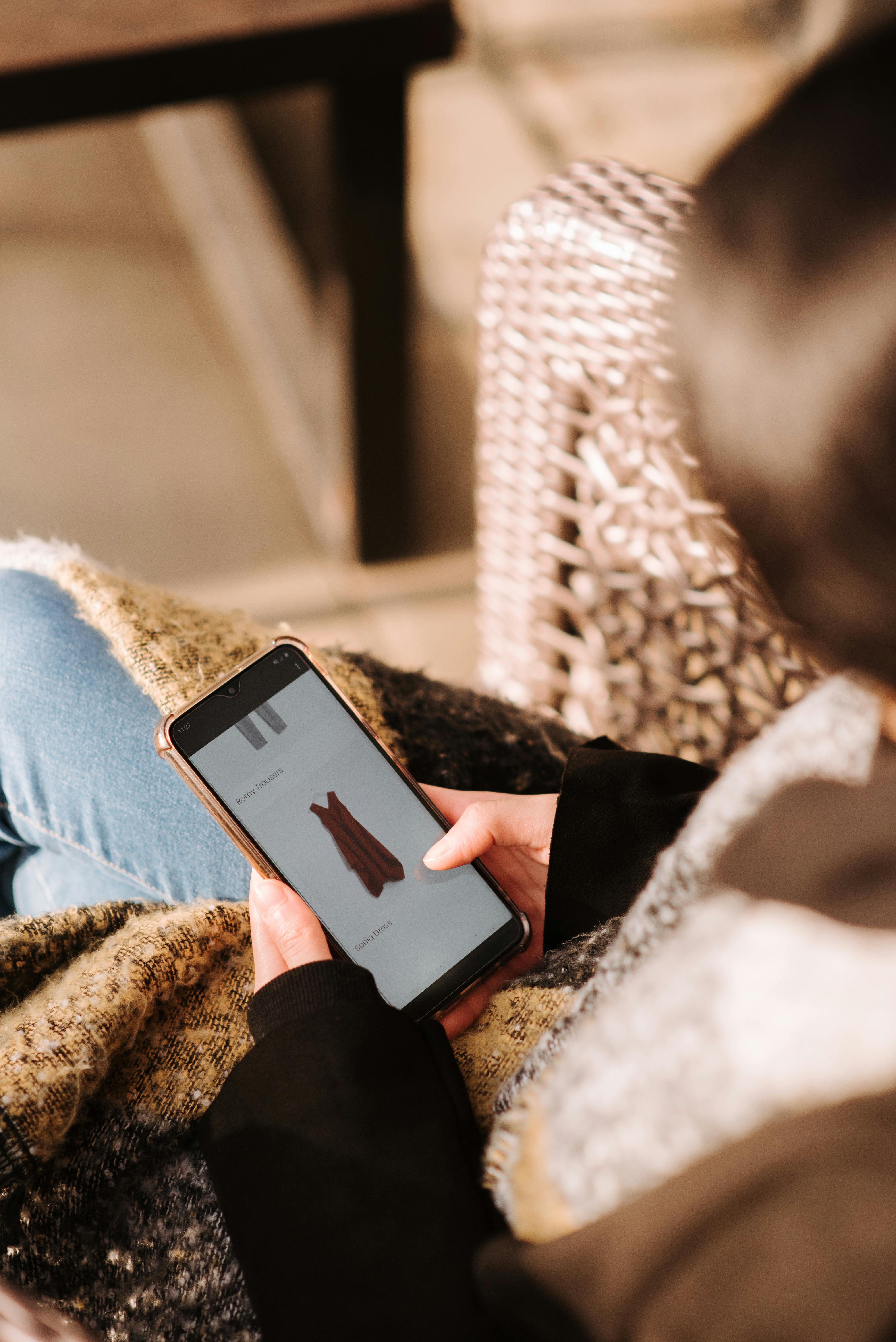
Instagram has established itself as the most relevant social sales channel for fashion, because 70% of the platform's active users buy directly on Instagram (Capital One Shopping Research, 2026). For a fashion e-commerce brand, ignoring this channel means giving up a majority share of its potential audience.
The market confirms this dynamic at the macro level. Social commerce sales in the US reached $85.58 billion in 2025, up 19.5% year over year, with a forecast surpassing $100 billion in 2026 (eMarketer, 2026). Fashion captures a disproportionate share of this growth.
130 million Instagram users interact with shoppable posts every month (Capital One Shopping Research, 2026). To understand the organic levers that feed this audience without relying on paid ads, our guide organic Instagram growth 2026 without ads covers tactics applicable to any industry, fashion included.
Major fashion brands confirm this trend at their own scale. Instagram views for Gap, Alo, and FWRD rose 43% year over year, driven mainly by Reels (Dash Social 2026 Fashion Benchmark Report, 2026). An independent fashion e-commerce brand can lean on the same formats, at a far smaller budget.
What obstacles hold back conversion for fashion e-commerce brands on Instagram?

The main obstacle isn't audience, it's engagement: the average organic engagement rate on Instagram dropped to 0.48% in 2026, down 24% year over year (Socialinsider Instagram Benchmarks, 2026). An account posting with no format strategy gets lost in this more competitive landscape.
This decline affects each format differently. Carousels show 0.55% engagement, Reels 0.52%, and static images only 0.37% (Socialinsider Instagram Benchmarks, 2026). Many fashion shops still mostly post static product photos, the lowest-performing format.
Conversion reveals an even sharper gap between fashion e-commerce brands. The bottom decile converts barely 0.2%, the fashion/apparel category averages 2.2%, and the top 10% exceeds 4.7% (Littledata via 3dlook.ai, 2026). This gap isn't due to the product, but to how Instagram traffic is captured and qualified upstream.
Many fashion e-commerce brands stalling on Instagram have already tried several things: boosting posts occasionally, posting more without a content strategy, or copying bigger competitors' content. These isolated attempts rarely address the real cause, a lack of consistency and targeting of the audience that actually engages. For a look at concrete user feedback on this kind of support, our article Propulse reviews after 3 months of use details results observed in other industries.
Which strategy actually transforms a fashion e-commerce brand's Instagram presence?
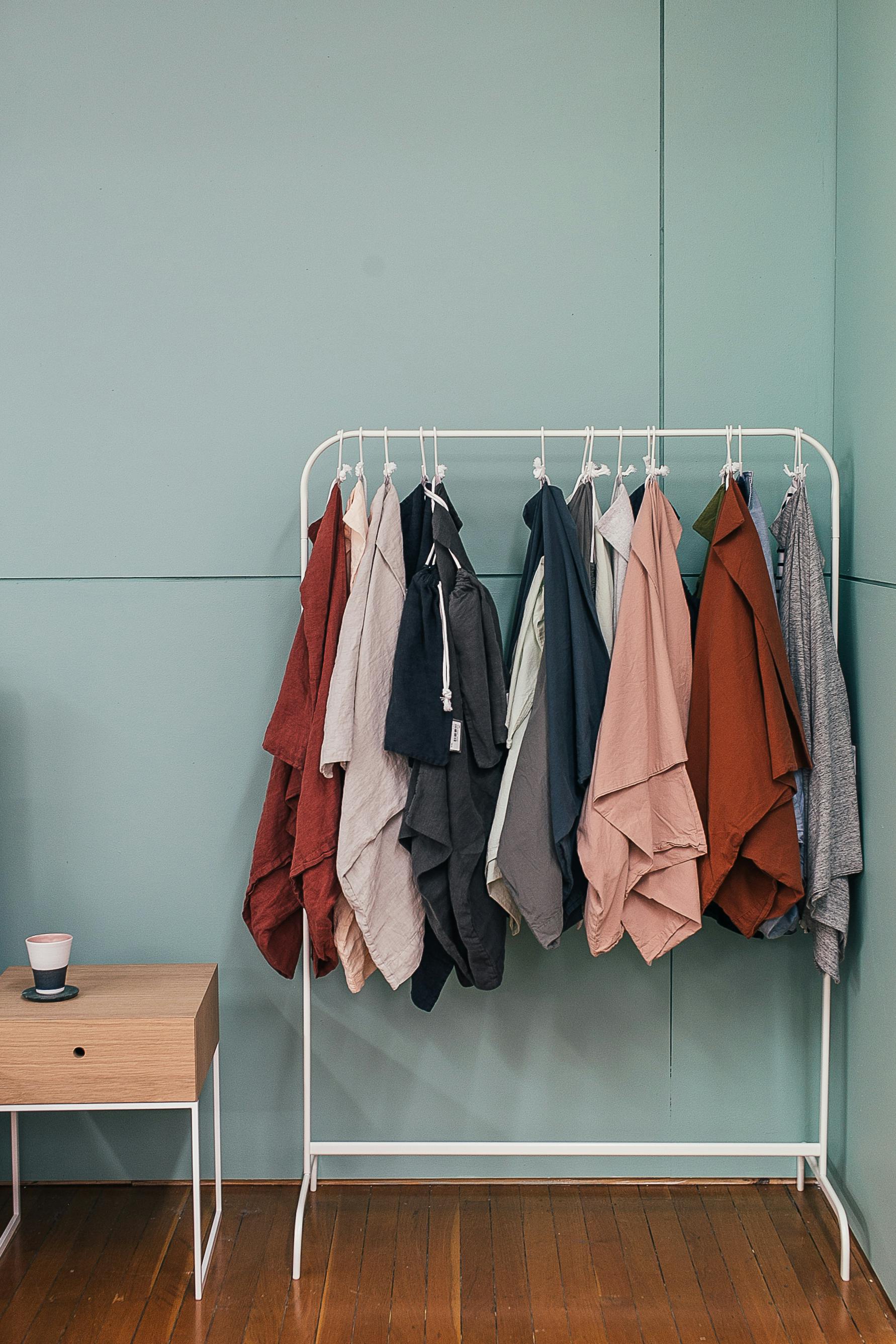
The most effective strategy combines three levers: targeted organic automation, optimized Reels and carousel content, and a fully configured social commerce setup. Reels views for luxury brands rose 234% in Q2 2025 (eMarketer, 2026), proof that this format remains underused by most fashion e-commerce brands.
This is why Propulse builds its approach around three combined pillars rather than one. Organic automation, with a residential 4G IP, engages a qualified fashion audience daily without constant manual intervention. Full feature details are available on the Propulse services page.
Content is the second pillar, with a clear priority on Reels and carousels over static product photos. These two formats show average engagement of 0.52% and 0.55% respectively, versus 0.37% for still images (Socialinsider Instagram Benchmarks, 2026). Moving from a feed of product photos to a feed of dynamic content directly changes organic reach.
The third pillar, a fully configured social commerce setup, activates Instagram's native shopping features: product tags, a synced catalog, and integrated checkout. The average cart value on Instagram Shopping reaches $65 (Capital One Shopping Research, 2026), a level that easily justifies the initial setup time.
Rushing remains the main risk with this approach: trying to activate everything at once without giving the audience time to adjust to the new content rhythm. A gradual 60-day rollout limits this risk, letting each pillar produce its effects before adding the next.
What does the 60-day implementation look like?
A fashion e-commerce brand applying this method over 60 days typically follows four distinct phases. Each phase lasts about two weeks and builds on data collected in the previous one, with no improvisation or permanent shift in direction.
- Weeks 1-2, audit and calibration: analysis of the existing account, product catalog, and competitor accounts positioned in the same fashion segment. Setup of organic automation and definition of target audiences by style and price range.
- Weeks 3-4, building consistency: setting up a posting calendar mixing lifestyle Reels, collection carousels, and behind-the-scenes content from the studio or warehouse. Automation starts engaging qualified fashion profiles daily.
- Weeks 5-6, activating social commerce: setting up or optimizing the product catalog, adding shopping tags to every relevant post, and checking the purchase funnel from Instagram through to payment.
- Weeks 7-8, continuous optimization: adjusting formats and posting times based on measured engagement, arbitrating between Reels and carousels based on the account's actual performance. A typical fashion e-commerce brand usually sees Instagram traffic to the shop accelerate from this phase onward.
In practice, this implementation relies on a small set of tools: the Propulse organic automation platform, a shared content calendar, the product catalog synced with Instagram Shopping, and a weekly dashboard tracking key metrics. No additional tools are needed to get started.
A small e-commerce team doesn't need a full-time social media role to apply this method. Automation handles most of the daily engagement, freeing up the team to focus on content production and customer service.
What results can a fashion e-commerce brand expect in 60 days?
A fashion e-commerce brand applying this method over 60 days can reasonably aim to close the gap toward the best performers in the sector, above 4.7% (Littledata via 3dlook.ai, 2026), versus an average checkout rate of 2.7% on Instagram (Capital One Shopping Research, 2026).
| Metric | Before | 60-day target |
|---|---|---|
| Sales attributed to Instagram | Marginal or untracked | Up to +30% additional sales |
| Instagram conversion rate | Close to sector average (2.2%) | Approaching top 20% (>3.2%) |
| Content format mix | Mostly static product photos | Mostly Reels and carousels |
| Average cart value via Instagram Shopping | Not structured | Around $65 (sector benchmark) |
This trajectory fits into a fast-growing market. Smaller accounts often show the highest organic growth rates, sometimes above 20%, versus around 11% for accounts nearing a million followers (Socialinsider Instagram Benchmarks, 2026). A fashion e-commerce brand starting small therefore has more organic upside than already-established big-name retailers.
Average cart value is a gain that's often underestimated in this kind of scenario. With an average Instagram Shopping cart of $65 (Capital One Shopping Research, 2026), growth in Instagram traffic doesn't just mean more orders, it also means more revenue per order.
The e-commerce team also gains clarity on what actually works, an effect often overlooked next to sales figures. Seeing clearly which formats drive the most engagement helps steer future photoshoots and which collections get featured next.
What lessons should you take from this scenario?
This scenario mainly holds one lesson: a fashion e-commerce brand's Instagram growth rests on combining three levers, never just one in isolation. Focusing only on content without setting up social commerce, or vice versa, sharply limits the results achieved.
- Content format matters more than volume. Switching from static product photos to Reels and carousels directly changes organic reach, without posting more.
- Social commerce isn't a side option. With 130 million users interacting with shoppable posts every month (Capital One Shopping Research, 2026), not setting up the catalog means ignoring an already-active conversion channel.
- The gap between players in the sector is huge. The spread between 0.2% and 4.7% conversion shows that performance depends mainly on method, not just the product being sold.
- Smaller accounts have a growth advantage. An organic rate that can exceed 20% for starting accounts justifies investing early in a structured method rather than waiting.
- Patience remains a success factor. The first two weeks mostly produce invisible results, the audit and calibration. A measurable shift in traffic and sales generally starts from the third phase onward.
Frequently asked questions
Would this scenario work for a fashion e-commerce brand just starting out on Instagram?
Yes, the method adapts to an account starting from zero. The initial audit simply calibrates goals on a more modest base, but the four phases stay the same.
Do you need a large product catalog to apply this strategy?
No. The typical profile in this scenario has 150 to 400 SKUs, a level accessible to most independent fashion e-commerce brands from their very first collections.
Are Reels really more effective than standard product photos?
Yes, the data confirms it. Reels show 0.52% average engagement versus 0.37% for static images (Socialinsider Instagram Benchmarks, 2026), a gap that justifies prioritizing this format.
Do you need a dedicated community manager to apply this method?
No, not necessarily. Organic automation handles most of the daily engagement, letting a small team keep control over content without hiring full-time.
How long before you see the first concrete results?
The first engagement shifts typically appear from the second phase onward, around the third or fourth week. A measurable shift toward sales tends to arrive from the sixth week onward, once social commerce is activated.
How Propulse helps you put all this into practice

A fashion e-commerce brand's Instagram growth rarely depends on a single factor: it requires content matched to high-performing formats, a well-configured social commerce setup, and reliable day-to-day automation. That's exactly what Propulse builds for you.
- Organic automation with a residential 4G IP, for 100% real growth with no suspicious bots.
- Built-in ProSpecteur, to automatically engage new fashion profiles interacting with your brand.
- Fashion-audience targeting, matched to your style, price range, and collections.
- Regular tracking reports, to adjust your content strategy based on measured engagement.
- Support available from the Starter pack up to the Elite pack for larger catalogs.
Whether you're launching your first online collection or already managing several hundred SKUs, the method stays the same: prioritize formats that engage, activate social commerce, and automate daily engagement. The rest is about adjusting the pace based on your results.
Our clients gain on average 3x qualified followers in 15 days with this combined approach (detailed results on our case studies page). Discover the details of our features on the services page, or check our pricing directly to pick the pack that fits your fashion e-commerce brand.